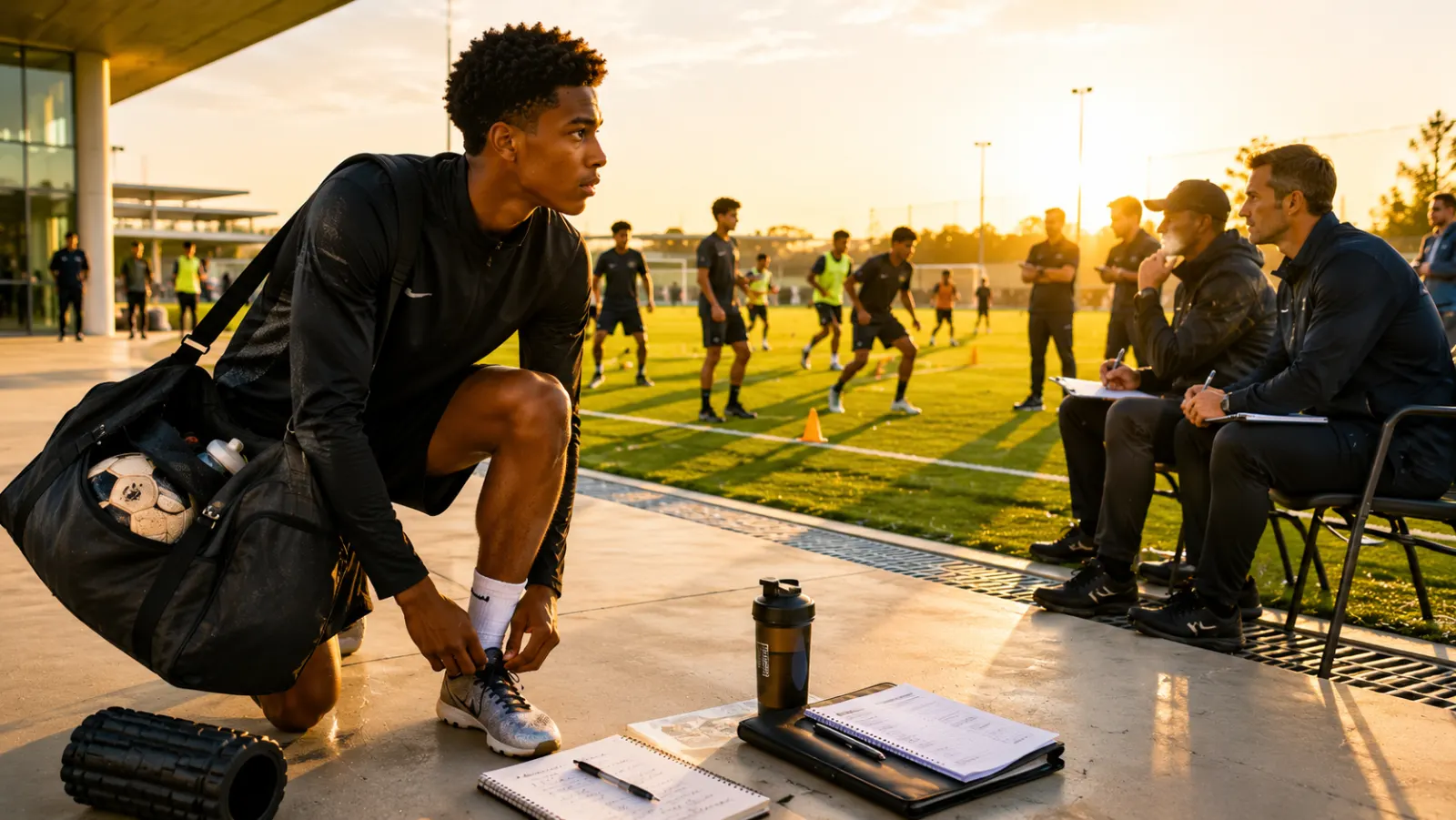
Why Preparation Decides Everything
A trial is rarely lost because of lack of talent. It is usually lost because of lack of preparation. Nervousness, fatigue, unfamiliar surroundings, and unclear expectations all reduce performance. Athletes who prepare deeply give themselves an immediate advantage over those who simply show up.
Preparation creates confidence. Confidence creates performance. Performance creates opportunity.
What A Trial Actually Tests
A typical trial evaluates:
- Physical condition
- Technical ability
- Tactical understanding
- Decision making under pressure
- Attitude and coachability
- Communication with teammates
All of these can be prepared in advance.
The Weeks Before
In the four to six weeks before a trial, focus on:
- Structured training with clear goals
- Quality recovery and sleep
- Nutrition and hydration
- Reviewing your own match video
- Mental rehearsal and visualization
The Days Before
In the final days, prioritize:
- Lighter training to stay sharp without fatigue
- Extra sleep
- Hydration
- Preparing your kit, documents, and travel plan
- Visualizing success and key situations
Trials are won and lost in these final 72 hours.
On The Day
On the day of the trial, the most successful athletes:
- Arrive early
- Are physically and mentally ready
- Know their strengths and how to show them
- Stay focused even when things go wrong
- Communicate confidently with coaches and teammates
- Respect everyone, including opponents
Common Mistakes To Avoid
Athletes often weaken their own performance by:
- Trying to do too much to impress
- Playing outside their natural style
- Hiding from the ball or the action
- Reacting poorly to mistakes
- Forgetting basic professionalism
Coaches notice these behaviors immediately and remember them.
How To Show Your Strengths
Trials reward athletes who know exactly what they are good at and find opportunities to demonstrate it. Before the trial, identify three or four specific strengths — speed, vision, work rate, accuracy, leadership — and commit to showing them clearly during the session.
Do not try to be a different player. Be the best version of yourself.
The Mental Side Of Trials
Pressure is part of every trial. Athletes who perform well train themselves to expect nerves, accept them, and continue anyway. Breathing techniques, simple routines, and pre-trial visualization can all reduce anxiety and increase focus.
After The Trial
After the trial, professional athletes:
- Thank coaches and staff
- Ask for honest feedback
- Review what went well and what did not
- Stay in contact respectfully
- Continue training as if the next opportunity is already coming
Opportunity Through Kelball
Kelball helps athletes prepare for trials by giving them a structured profile they can share with coaches in advance. Statistics, video, and references reduce the unknown and help coaches arrive at the trial already informed about the athlete.
Conclusion
First impressions matter, but they are not accidents. They are designed. Athletes who prepare physically, mentally, and professionally walk into trials with a clear advantage — and they often walk out with the opportunity they came for.
Take The Next Step With Kelball
Whether you are an athlete chasing your dream, a recruiter searching for the next breakthrough talent, or a club, academy, or university building your future roster — Kelball connects you with the right people and the right opportunities, worldwide.